
Light Weathering Test Service in Malaysia
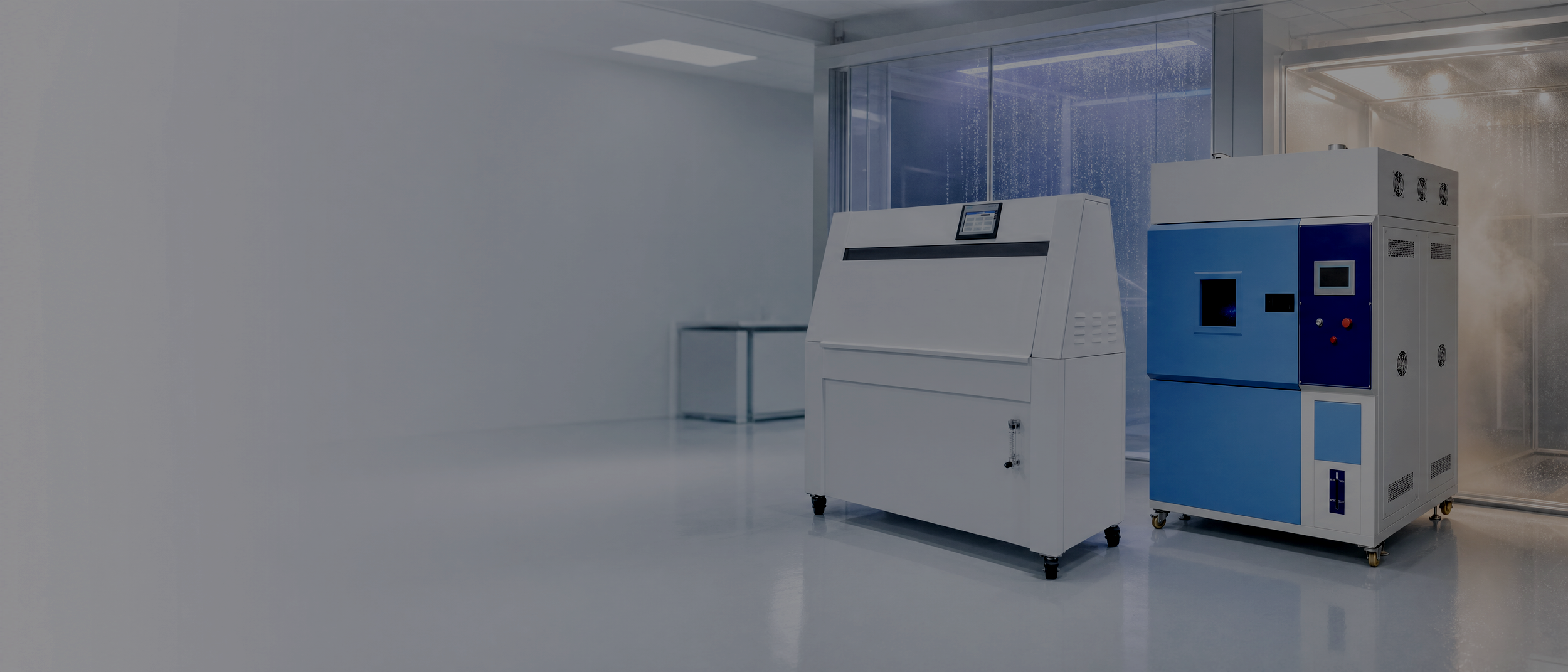
TestLabs provides light weathering testing in Malaysia using controlled UV, Xenon arc and Carbon arc exposure methods. Our primary focus is UV weathering testing, followed by Xenon arc weathering testing, for manufacturers that need to assess how coatings, plastics, automotive components, wood, adhesives and other non-metallic materials respond to light, heat and moisture. Carbon arc weathering testing is also available when a customer specification or legacy test method requires that light source.
A suitable weathering test plan depends on the material, specimen geometry, required standard or customer method, exposure cycle, moisture conditions and evaluation criteria. We confirm these details before quotation so that the proposed test is relevant to your product and reporting needs.
What Is Light Weathering Testing?
Light weathering testing is a controlled laboratory exposure used to study changes that may occur when a product is exposed to light, heat and moisture. Depending on the selected method, the exposure can include fluorescent ultraviolet lamps, Xenon arc light, condensation, humidity, water spray and temperature control. The test can help manufacturers compare formulations, screen materials, investigate failures and support product-development or quality-control decisions.
Accelerated exposure is not a universal one-to-one conversion of laboratory hours into a fixed number of outdoor years. Results depend on the selected cycle, light source, irradiance, temperature, moisture, specimen preparation, material formulation and evaluation method. The final report should therefore identify the actual operating conditions and the way the specimens were assessed.
UV Weathering Testing: Our Primary Service
What UV Weathering Testing Can Evaluate
Depending on the agreed method, TestLabs can help customers assess visual and physical changes such as colour or appearance change, gloss loss, cracking, peeling, chalking, embrittlement, adhesion change, tensile-property change or other specified performance indicators. The reportable observations and measurements should be agreed before testing begins.
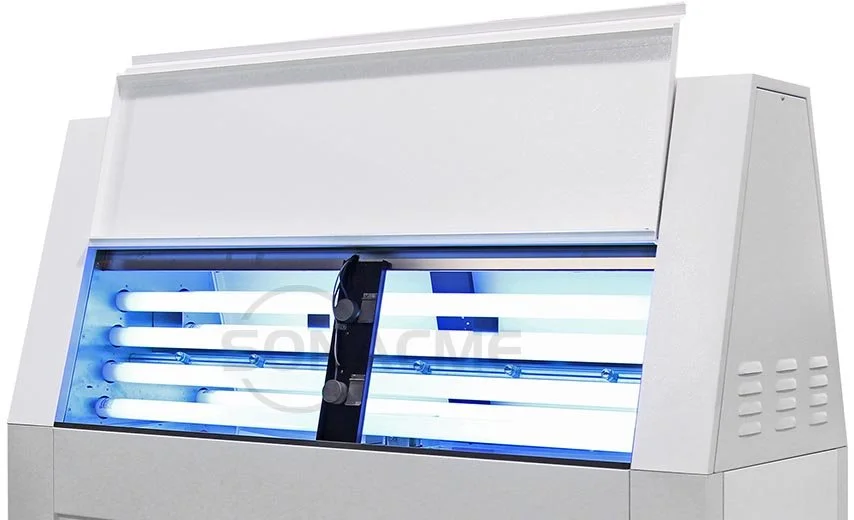
UV weathering testing is the first method we recommend when the product requirement focuses on ultraviolet exposure, condensation or water spray. Fluorescent UV lamps can be used with controlled temperature and moisture conditions to reproduce selected aspects of outdoor exposure. Depending on the material and agreed test method, the exposure may help reveal fading, gloss change, cracking, peeling, chalking, surface degradation or loss of mechanical performance.
UV weathering is commonly considered for paint and coating systems, plastics, automotive components, wood products, sealants, adhesives and other non-metallic materials. Where required by the customer’s specification, the test plan may be developed with reference to methods such as ASTM G154 or ISO 4892-3. The applicable lamp type, irradiance, temperature, condensation or spray cycle, exposure duration and evaluation method must be confirmed for the specific product rather than assumed from a generic cycle.
For equipment information, see the UV weathering chamber page. The available equipment page describes UV-A or UV-B fluorescent lamp options, irradiance and temperature control, condensation or water spray, and bench-top or tower configurations; the final configuration and test conditions remain product- and method-dependent.
Xenon Arc Weathering Testing
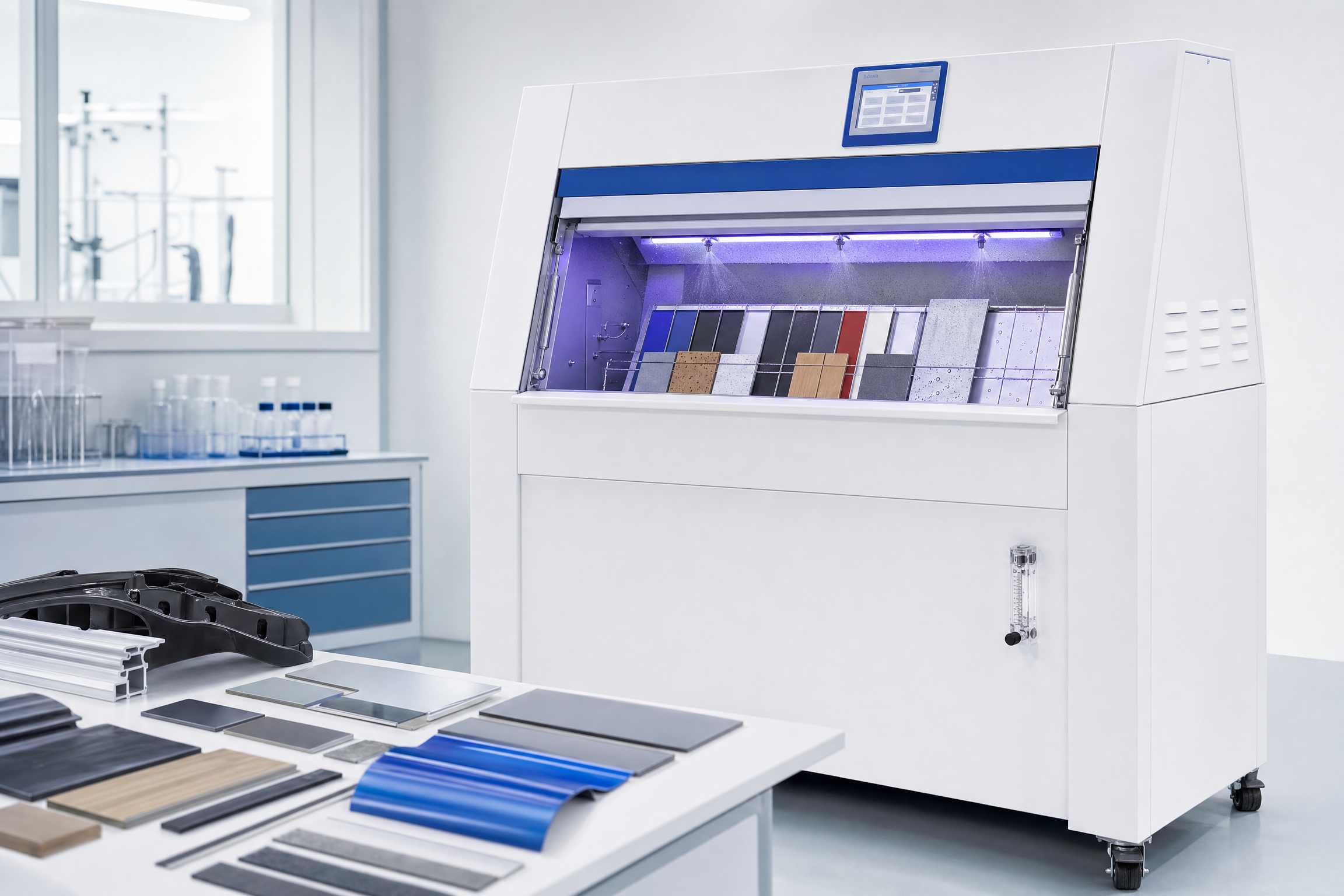
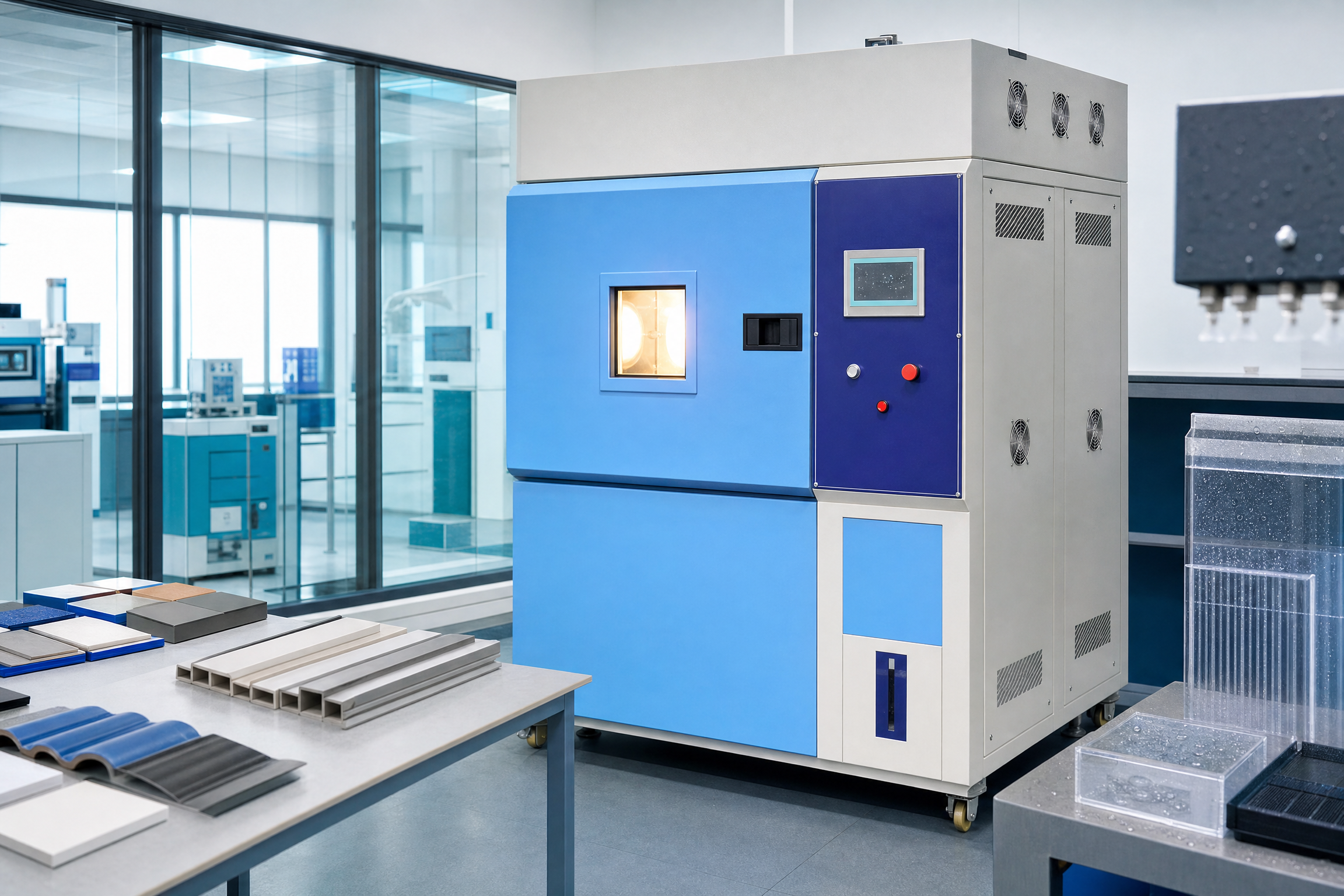
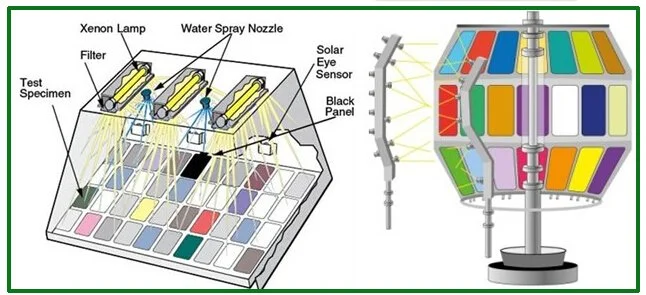
Xenon arc weathering testing is the second focus of our light weathering service and is considered when the requirement calls for a broader simulation of sunlight together with heat and moisture. Xenon arc systems can be configured with filters and controlled exposure conditions to support product development, comparative evaluation and quality-control work for suitable materials.
Xenon testing may be relevant to coatings, plastics, automotive materials, building products, rubber and other non-metallic products when the customer’s specification or application calls for Xenon arc exposure. Depending on the applicable method, the cycle may control irradiance, black-panel or chamber temperature, humidity, condensation or water spray. ASTM G155 is a common reference for Xenon arc apparatus operation; the exact exposure conditions and evaluation criteria must be defined for the material and intended use.
See the Xenon arc test chamber page for the related equipment information. Contact TestLabs if you need help deciding whether UV or Xenon exposure is the more appropriate starting point for your product.
What we review before testing
To prepare an accurate salt spray test quotation, please send the information below. If your customer specification already defines the method, exposure period, specimen preparation, rating system, or report format, attach it to the enquiry. Where a requirement is not specified, TestLabs can review the request and identify the items that need confirmation before testing.
Carbon Arc Weathering Testing
Carbon arc weathering testing is available as a lower-priority, method-specific option. It is most appropriate when a customer specification, legacy requirement or sector-specific procedure expressly calls for a carbon arc light source. Because carbon arc, fluorescent UV and Xenon arc exposures are not interchangeable by default, the required standard, cycle, specimen preparation and evaluation criteria should be confirmed before quotation.
If your purchase specification names a carbon arc method, send the method number or test clause to TestLabs so that TestLabs can review the requirement and confirm the available test arrangement.
Applications for Light Weathering Tests
Light weathering testing can support product development, incoming-material comparison, formulation screening, quality control, failure investigation and customer approval activities. Typical product groups include architectural and industrial coatings, plastics and polymer components, automotive trim and parts, adhesives and sealants, wood and wood-based products, rubber components, building materials and other non-metallic products exposed to light and moisture during service.
The most useful test plan is the one that connects the exposure to a measurable product decision. Before testing, define whether the main concern is colour and appearance, gloss, cracking, chalking, adhesion, strength, dimensional change or another product-specific criterion.
| Method | When it is commonly considered | Typical exposure focus |
|---|---|---|
| UV fluorescent weathering | When the requirement emphasizes ultraviolet exposure, condensation, or water spray for non-metallic materials. | Controlled fluorescent UV light with selected temperature and moisture cycles. The applicable lamp, irradiance, exposure cycle, and evaluation criteria depend on the product and test method. |
| Xenon arc weathering | When a broader sunlight simulation or a customer-specified Xenon arc method is required. | Controlled Xenon arc light with selected heat and moisture conditions such as humidity, condensation, or water spray. The exact filter, setpoints, cycle, and evaluation criteria must be confirmed. |
| Carbon arc weathering | When a customer specification, legacy requirement, or sector-specific procedure expressly calls for a carbon arc light source. | Method-specific carbon arc exposure. It should not be treated as automatically interchangeable with fluorescent UV or Xenon arc exposure. |
The table is a general selection guide, not a substitute for the applicable product standard or customer test method. Please provide the required standard, cycle, specimen details, and evaluation criteria for confirmation before quotation.
Choosing the Right Weathering Method
UV weathering is usually the most direct starting point when the requirement emphasizes ultraviolet exposure and condensation or water spray. Xenon arc weathering is considered when a broader sunlight simulation or a customer-specified Xenon method is required. Carbon arc weathering is reserved for specifications that explicitly call for that method. TestLabs can review your product, applicable standard and evaluation criteria before recommending the test arrangement.
Request a Light Weathering Test Quotation
To prepare a useful quotation, please provide the product or material type, specimen dimensions and geometry, approximate quantity or exposed area, required standard or customer test method, preferred exposure method if already specified, required exposure duration or cycle, properties to be evaluated, report requirements, target completion date and delivery location. Customers in Penang, Selangor, Johor, Kuala Lumpur and other parts of Malaysia may contact TestLabs for assistance with the initial test-plan review.
Frequently Asked Questions About Light Weathering Testing
What is a light weathering test?
Light weathering testing is a controlled laboratory exposure used to study changes that may occur when a product is exposed to light, heat, and moisture. Depending on the selected method, the exposure can include fluorescent ultraviolet lamps, Xenon arc light, condensation, humidity, water spray, and temperature control.
Should I choose UV or Xenon weathering testing?
UV weathering testing is usually the first option when the requirement emphasizes ultraviolet exposure with condensation or water spray. Xenon arc weathering testing is considered when a broader sunlight simulation or a customer-specified Xenon arc method is required. The product, applicable standard, exposure cycle, and evaluation criteria should be reviewed before selecting the method.
What products can be evaluated with light weathering testing?
Common product groups include paint and coating systems, plastics, automotive components, wood products, adhesives, sealants, rubber products, building materials, and other non-metallic materials. The specimen form, mounting arrangement, and evaluation method must be confirmed for the specific product.
Can TestLabs review ASTM G154 or ASTM G155 requirements?
TestLabs can review a customer requirement that references ASTM G154 for fluorescent UV exposure or ASTM G155 for Xenon arc exposure. The applicable exposure cycle, operating conditions, specimen preparation, and evaluation criteria must be confirmed for the material and requested test method before quotation.
Is Carbon arc weathering testing available?
Carbon arc weathering testing can be reviewed as a lower-priority, method-specific option when a customer specification, legacy requirement, or sector-specific procedure expressly calls for a carbon arc light source. Carbon arc exposure should not be treated as automatically interchangeable with UV or Xenon arc exposure.
What information should I send for a quotation?
Please provide the product or material type, specimen dimensions and quantity, required standard or customer method, preferred exposure method, exposure duration or cycle, properties to be evaluated, report requirements, target completion date, and delivery location. If the method is not yet selected, TestLabs can review the product and intended evaluation before quotation.
For a quotation, email sales@testlabs.my, use the TestLabs contact page, or call +6018-2030306.
Request a Quotation
For a faster review, defines the method, exposure period, specimen preparation, rating system, or report format, attach it to the enquiry. Where a requirement is not specified, TestLabs can review the request and identify the items that need confirmation before testing.
We will review the information and advise on the next step or the details that still need to be confirmed.