
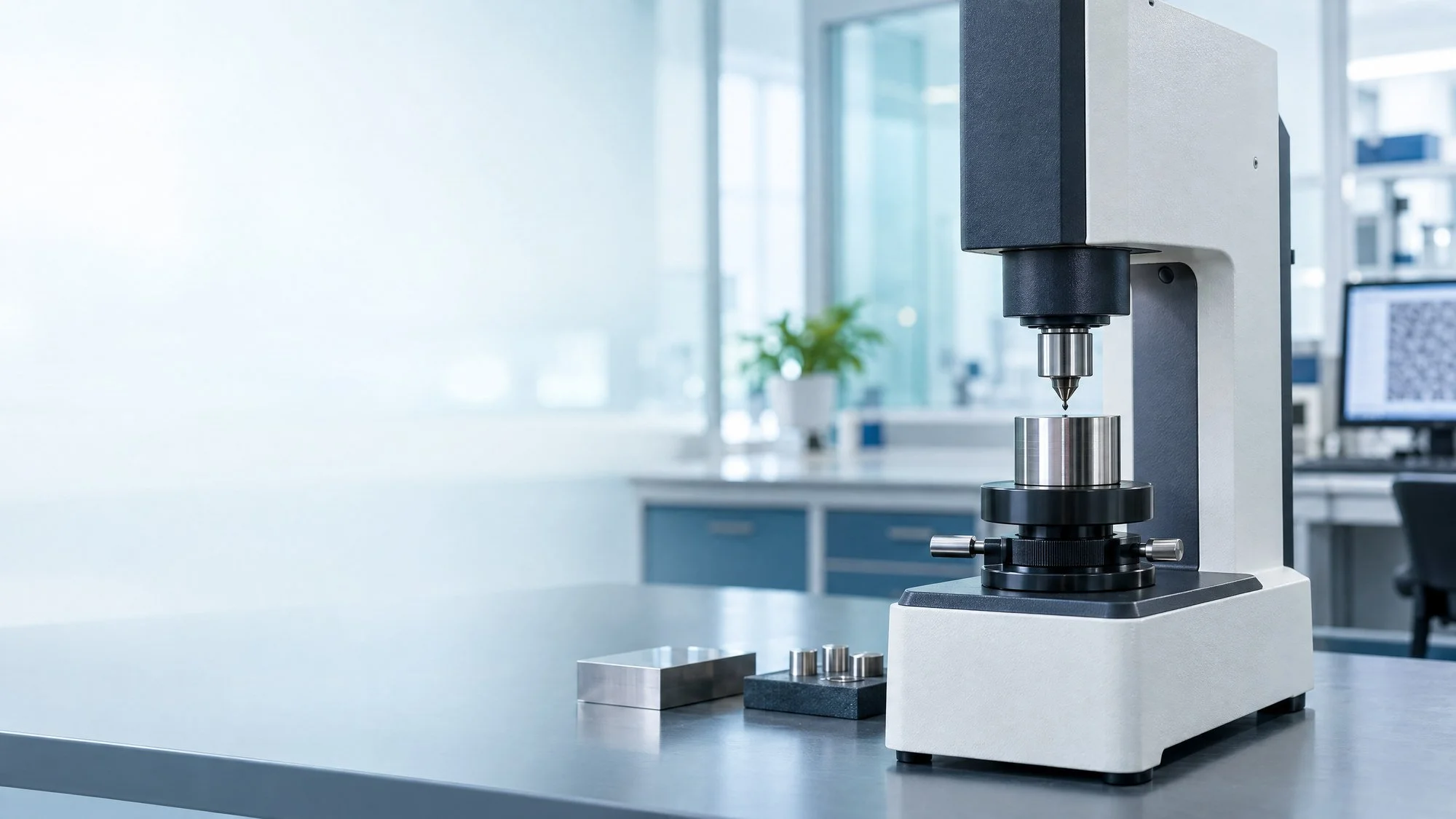
Rockwell Hardness Testers in Malaysia
A Rockwell hardness tester measures hardness from indentation depth using a selected indenter, test cycle and hardness scale. TestLabs supplies VTS standard Rockwell, superficial Rockwell and double Rockwell tester families in manual, motorized, digital and automatic configurations. We help shortlist a suitable model based on your material, specimen thickness and geometry, required scale, test method, throughput and data needs. Final model selection, availability and configuration are confirmed against your application.
✳︎
Local Technical Support
✳︎
1 Year Local Warranty
✳︎
Free Training
✳︎ Local Technical Support ✳︎ 1 Year Local Warranty ✳︎ Free Training
How Rockwell Hardness Testing Works
The Rockwell method determines hardness from the depth of indentation during a defined test cycle. The selected indenter and scale must suit the material and specimen. Surface condition, thickness, support, indentation spacing and the applicable test method can affect whether a measurement is suitable.
Standard Rockwell and superficial Rockwell are related depth-based methods, but they use different scale families and test-force ranges. Superficial Rockwell may be considered for thinner or surface-treated specimens only when the chosen scale, specimen thickness, support and applicable method permit. The two method families are not interchangeable.
For background, see the National Physical Laboratory overview of hardness testing.
VTS Rockwell Hardness Tester Model
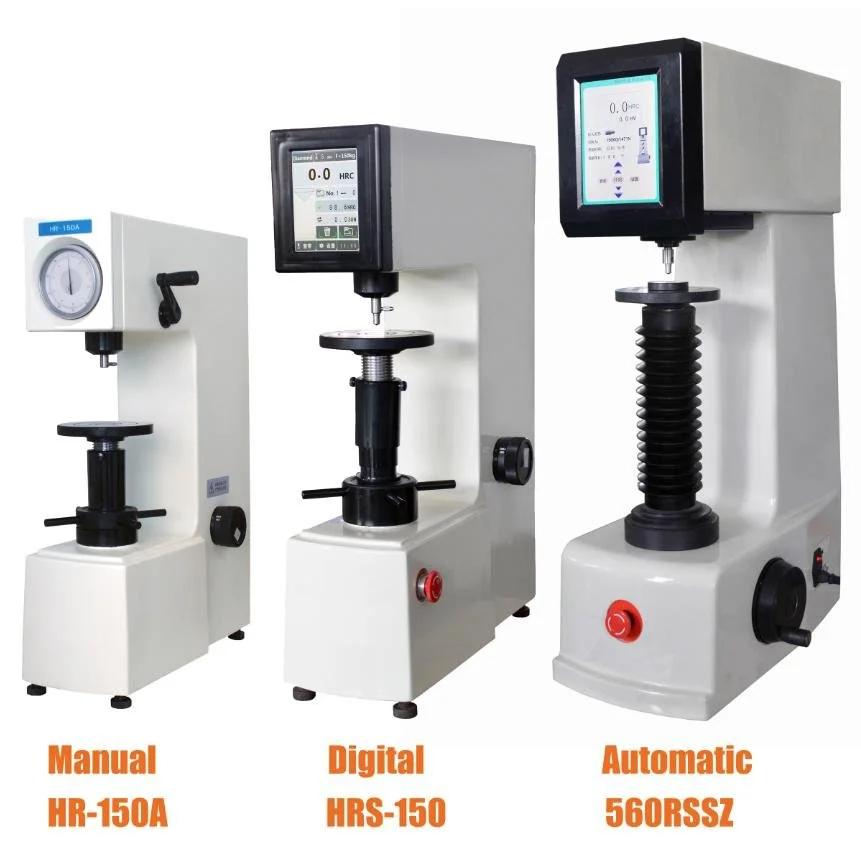
| Brochure model | Tester family | Control and readout | Brochure highlights |
|---|---|---|---|
| HR-150A | Standard Rockwell | Manual loading; dial indication | The brochure describes a manual model that does not require a power supply. |
| HR-150DT | Standard Rockwell | Motorized load, dwell and unload; dial indication | Motorized test cycle with selectable dwell time, as described in the brochure. |
| HRS-150 | Standard Rockwell | Digital touch-screen indication | Brochure features include data storage, maximum/minimum/average calculation, built-in printer and RS-232 interface. |
| HRM-45 | Superficial Rockwell | Manual loading; dial indication | The brochure describes a manual model that does not require a power supply. |
| HRM-45DT | Superficial Rockwell | Motorized load, dwell and unload; dial indication | Motorized test cycle with selectable dwell time, as described in the brochure. |
| HRMS-45 | Superficial Rockwell | Digital LCD indication | Brochure features include data storage, maximum/minimum/average calculation, built-in printer and RS-232 interface. |
| 560RSS | Double Rockwell | Digital LCD indication | Brochure describes standard and superficial Rockwell modes, result statistics, printer output and RS-232 interface. |
| 560RSSZ | Automatic double Rockwell | Touch screen; automatic test-table movement | Brochure highlights include automatic rise and homing, a one-key test sequence, data storage and RS-232 output. |
Confirm before quotation: This table summarizes brochure descriptions, not a stock list. Confirm current model availability and the exact supported scales, test forces, specimen space, power requirements, supplied accessories and applicable standard for the selected configuration.
Choose between manual, motorized and digital or automatic operation based on your test volume, data needs and preferred workflow. The brochure-listed range is not a confirmed stock list. TestLabs will confirm which model is currently offered and what is included in the quotation.
Manual models HR-150A and HRM-45 are described in the brochure as not requiring a power supply. Motorized and digital models have different power, readout and data-output requirements; confirm the details for the selected model.
Choose by sample and method
Standard, Superficial or Double Rockwell?
Start with the material and specimen, then select the method and scale required by the test standard or customer specification.
| Tester family | What it covers | When it may be considered | VTS brochure models | Confirm for your sample |
|---|---|---|---|---|
| Standard Rockwell | Standard Rockwell scales; available scales differ by model. | Routine hardness checks on suitable metals and specimens where the chosen scale and method apply. | HR-150A, HR-150DT and HRS-150 | Required scale, material, specimen thickness and shape, indenter, force and applicable test method. |
| Superficial Rockwell | Superficial Rockwell scales; model options and supported scales vary. | May be considered for thinner or surface-treated specimens when the specimen, method and standard permit. | HRM-45, HRM-45DT and HRMS-45 | Layer or specimen thickness, support, surface condition, required scale and standard. Do not assume every coating or thin part is suitable. |
| Double Rockwell | A tester family described in the brochure as supporting both standard and superficial Rockwell testing. | When a laboratory needs both test families on one tester, subject to the selected model's configurations. | 560RSS and 560RSSZ | Required methods and scales, loading sequence, data output, specimen geometry and model-specific forces. |
This is a starting-point guide, not a substitute for the applicable test method. Rockwell scales and superficial Rockwell scales are not interchangeable; select the method for the material, specimen and required standard.
Application fit
Materials and Applications
The VTS brochure lists Rockwell tester applications across several metals. Actual suitability depends on the material, specimen condition, selected scale and applicable test method.
Heat-treated steels
Brochure examples include quenched, tempered and annealed steels. Confirm the material condition and required Rockwell scale for the test.
Cast and alloy materials
Some hard castings, malleable cast iron, hard alloy steels and bearing steels are listed as application examples in the brochure.
Non-ferrous alloys
Aluminum and copper alloys appear among the brochure examples. The chosen scale and test method must suit the material and specimen geometry.
Surface-treated or thinner specimens
Superficial Rockwell may be considered for some surface-treated materials or sheet when specimen thickness, support and the applicable method permit.
Important: These are brochure examples, not a guarantee that every material, coating or part can be tested on every model. Confirm specimen thickness, surface condition, support, required scale and standard before selecting equipment.
Practical selection checklist
How to Choose a Rockwell Hardness Tester
Choose a tester by matching the required method and scale to your material, specimen geometry and testing workflow.
- Confirm the method and scale Identify whether you need standard Rockwell, superficial Rockwell or both, then confirm the required scale, indenter and customer method or applicable standard.
- Describe the specimen Consider material, heat treatment if known, thickness, shape, weight, surface condition and how the sample can be supported.
- Match operation to test volume Decide whether manual, motorized or automatic loading better fits your testing frequency and operator workflow.
- Review display and data needs Consider whether digital indication, result storage, statistics, printing or computer data output is needed for your process.
Before ordering, confirm the selected model’s supported scales and forces, specimen space, power requirements, included accessories and standard references. Features and configuration vary by model.
Request a model recommendation
What to Include in Your Enquiry
Send the details below to help TestLabs shortlist a VTS Rockwell model. We will confirm the model configuration, current availability and quotation scope against your application.
Email your requirements to TestLabsEmail: sales@testlabs.my
- Material and heat-treatment condition, if known
- Specimen dimensions, thickness and shape
- Approximate sample or part weight
- Required Rockwell scale or customer test method
- Applicable standard and edition, if specified
- Expected test volume and automation preference
- Digital data, printing or reporting requirements
- Delivery location in Malaysia
Rockwell Hardness Tester Questions
The appropriate Rockwell tester depends on the material, specimen, required scale and test method. Use these answers as a starting point and confirm the final configuration against your application.
How does a Rockwell hardness tester measure hardness?
It determines hardness from the depth of indentation during a specified test cycle using a selected indenter and scale. Test results also depend on specimen thickness, support, surface condition, indentation spacing and the applicable method.
What is the difference between standard and superficial Rockwell testing?
Both are depth-based Rockwell methods, but superficial Rockwell uses lower test forces. It may be considered for thinner or surface-treated specimens when the selected scale, material, thickness, support and standard permit. The two methods and their scales are not interchangeable.
Which VTS Rockwell hardness tester models are shown in the brochure?
The supplied VTS brochure lists HR-150A, HR-150DT and HRS-150 standard Rockwell models; HRM-45, HRM-45DT and HRMS-45 superficial Rockwell models; and 560RSS and 560RSSZ double Rockwell models. These are brochure-listed models, not a confirmed stock list; confirm current availability and configuration with TestLabs.
Do you have manual, motorized and digital Rockwell testers?
Yes. The brochure includes manual models HR-150A and HRM-45, motorized models HR-150DT and HRM-45DT, and digital models HRS-150, HRMS-45 and 560RSS; 560RSSZ is described as an automatic double Rockwell model. Functions vary by model.
Does the manual HR-150A need an electrical power supply?
The brochure describes HR-150A and the manual superficial model HRM-45 as not needing a power supply. Verify the current configuration, test setup and accessories with TestLabs before ordering.
How do I choose the correct Rockwell scale or tester?
Send the material and heat-treatment condition if known, specimen dimensions and thickness, part shape and weight, required hardness scale or customer method, applicable standard and edition, expected test volume, and whether digital data capture or automated loading is needed. Scale selection must suit the material, geometry and method.
Which standards do the VTS Rockwell models reference?
The supplied brochures list references including ISO 6508, ASTM E-18, JIS Z2245 and GB/T 230.2 for various models. The references differ by model. Confirm the exact model, applicable standard and edition for the application; the brochure is not a blanket certification statement.
Does purchasing a hardness tester certify a material or product?
No. A hardness tester is an instrument for performing measurements and does not itself certify a product or material. Confirm test-method suitability and any required calibration, verification, accreditation or certification separately.
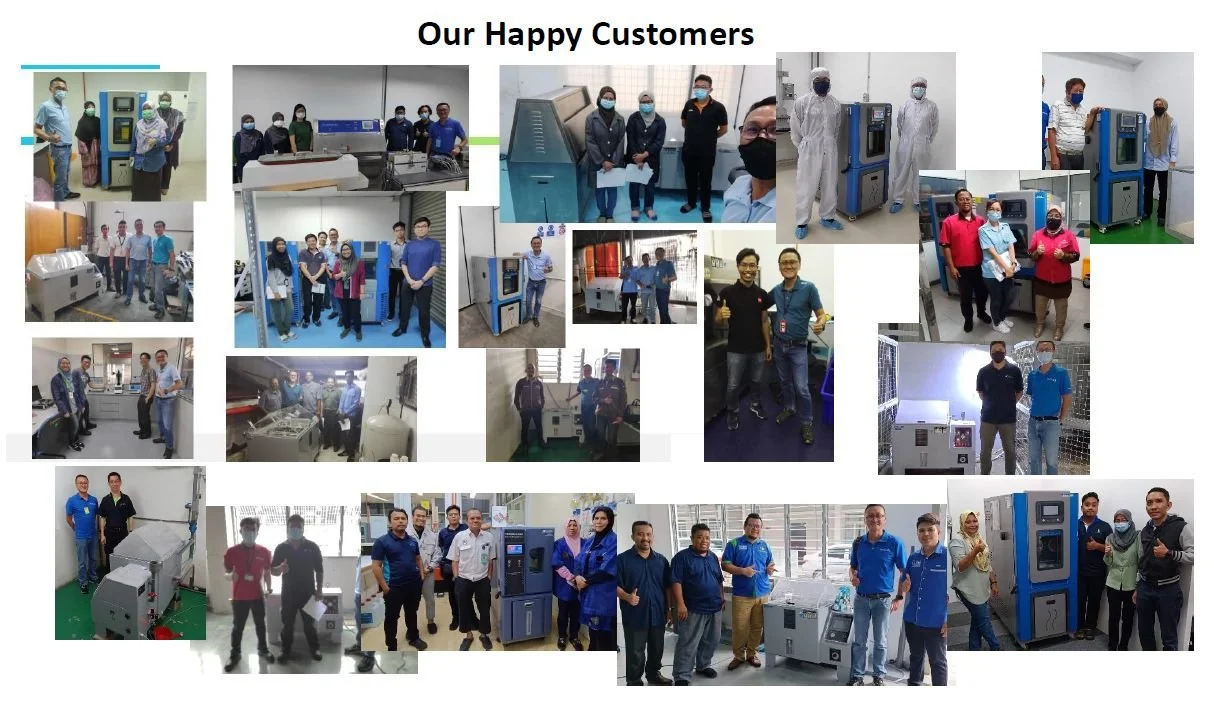
Localized Support for Malaysia's Industrial Hubs
We provide direct equipment sales, technical supply, and rapid on-site maintenance for specialized industries across Malaysia:
• Penang: Semiconductor labs and microelectronics wafer fabrication facilities requiring precise steady-state climate chambers.
• Selangor: Automotive component testing and industrial manufacturing QA facilities needing programmable environmental chambers.
• Johor: Heavy manufacturing and electronics assembly hubs demanding reliable temperature humidity testing equipment.
• Kuala Lumpur: Centralized R&D and compliance testing laboratories.
Request a Quotation
Email TestLabs with your material, specimen details, required scale and test method. We’ll review the VTS range and confirm a suitable model to quote.