

Water Vapor Transmission Rate (WVTR) Testers
TestLabs offers two water-vapour transmission rate testing approaches for packaging films, sheets and barrier materials. SN-H01E uses an infrared moisture sensor for high- and medium-barrier materials; SN-W01E uses a gravimetric cup method. Choose by the required method, specimen, test conditions and expected WVTR range.
✳︎
Local Technical Support
✳︎
1 Year Local Warranty
✳︎
Free Training
✳︎ Local Technical Support ✳︎ 1 Year Local Warranty ✳︎ Free Training
Choose the method that matches your test requirement
WVTR describes how quickly water vapour passes through a material specimen under stated conditions. Results can depend on the test method, temperature, relative humidity and specimen preparation. Compare results only when the test conditions and methods are appropriate for the intended use.
SN-H01E · Infrared sensor
Low published WVTR range and materials described for high- and medium-barrier testing.
SN-W01E · Gravimetric cup
Mass-change measurement for packaging films, sheets and other stated specimen types.
Compare SN-H01E and SN-W01E WVTR testers
Use this comparison as a starting point. Final suitability depends on your required standard or customer method, test conditions, material and available utilities.
| Model | Measurement method | Published WVTR range | Materials stated for the model | Specimens per run | Published user-provided items |
|---|---|---|---|---|---|
| SN-H01E | Measurement methodInfrared moisture-sensor method | Published WVTR range0.005–50 g/(m²·24h) | Materials stated for the modelHigh- and medium-barrier films and sheets, including plastic films, composite laminates, foil-based materials, PP, PVC, PVDC, metal foil, rubber and silicon wafers. | Specimens per run1 | Published user-provided itemsComputer, high-purity nitrogen (99.999%), compressed air (>0.6 MPa), and listed pressure-control accessories. |
| SN-W01E | Measurement methodGravimetric cup method | Published WVTR range0.5–10,000 g/(m²·24h) | Materials stated for the modelPlastic and composite films, sheets, plastic bottles and plastic bags. | Specimens per run1 | Published user-provided itemsComputer. Confirm specimen fixtures and site utilities for the intended test. |
Published ranges and materials are model-page values. The methods and test conditions differ, so ranges alone should not be treated as a direct performance comparison. Confirm the required method, specimen geometry and operating conditions before ordering.
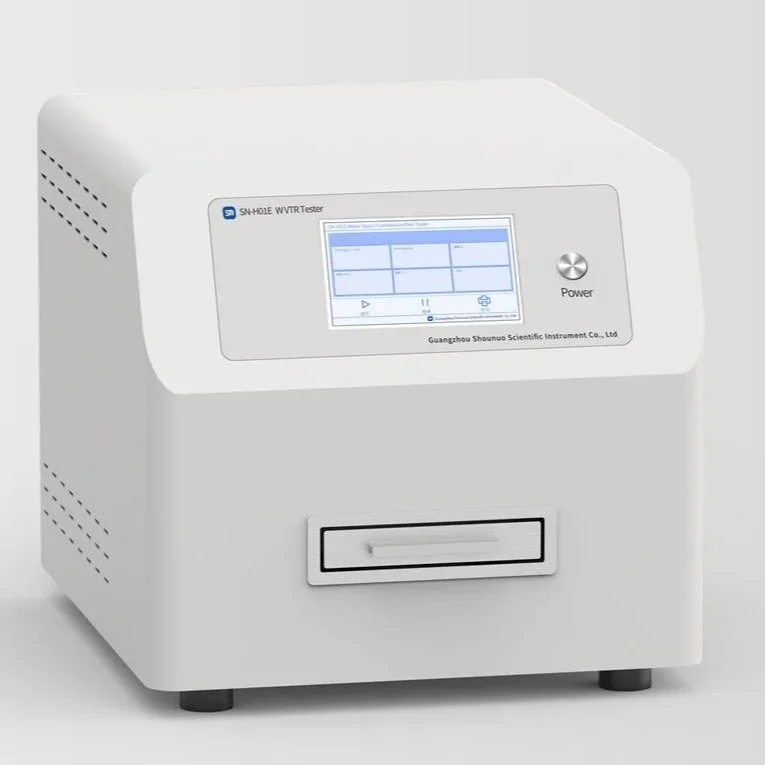
SN-H01E Water Vapor Transmission Rate Tester
SN-H01E measures water-vapour transmission using an infrared moisture sensor. The specimen separates a humidified nitrogen side from a dry nitrogen side; the sensor measures water vapour carried through the dry-side gas flow. Product information describes this model for high- and medium-barrier materials.
Stated material examples include plastic films, paper-plastic and co-extruded films, aluminized and foil composite films, PP, PVC, PVDC, metal foil, rubber and silicon wafers.
Published setup information: computer, 99.999% high-purity nitrogen, compressed air above 0.6 MPa, pressure-reducing and regulating valves, a pressure gauge and an oil-water separator are listed as user-provided items. Confirm site requirements before ordering.
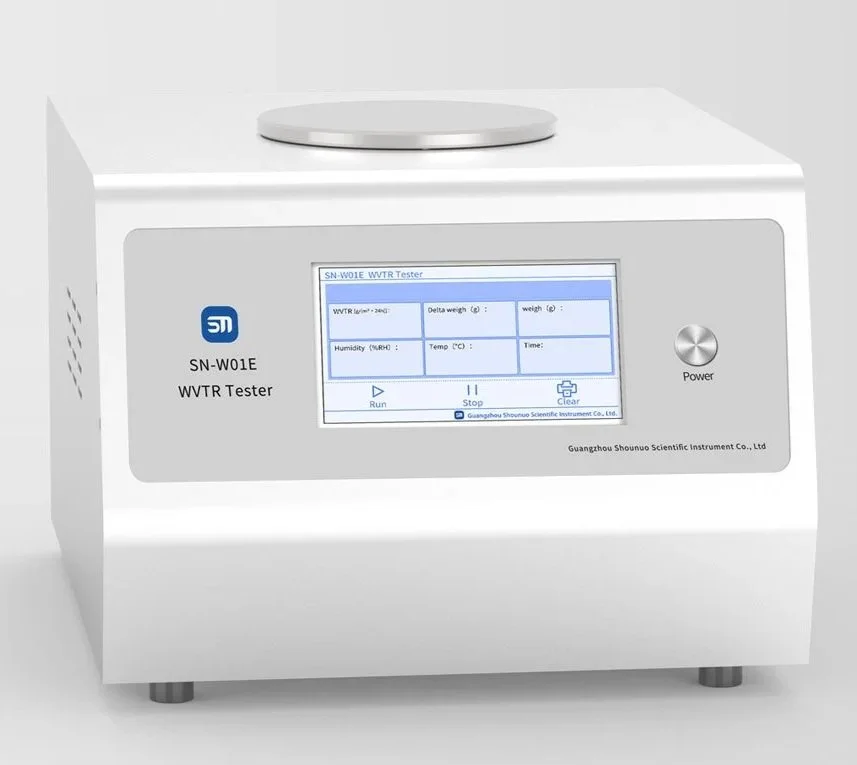
SN-W01E Water Vapor Transmission Rate Tester
SN-W01E uses a cup method. A conditioned specimen is sealed over a cup containing distilled water, and the cup is placed in the test chamber. The system calculates WVTR from the change in the cup’s overall mass over time.
Stated material examples include plastic and composite films, sheets, plastic bottles and plastic bags. Confirm the specimen geometry and any fixture requirements for intact packages.
Published setup information: a computer is listed as a user-provided item. Confirm the complete utilities and installation requirements for the intended configuration.
Technical specifications
The values below are the published model-page specifications. “Not stated” means the value was not given for that model in its product information.
| Parameter | SN-H01E | SN-W01E |
|---|---|---|
| WVTR measuring range | SN-H01E0.005–50 g/(m²·24h) | SN-W01E0.5–10,000 g/(m²·24h) |
| WVTR resolution | SN-H01E0.0001 g/(m²·24h) | SN-W01E0.1 g/(m²·24h) |
| Test temperature | SN-H01E15–55 °C | SN-W01ERoom temperature to 55 °C |
| Temperature accuracy | SN-H01E±0.5 °C | SN-W01E±0.5 °C |
| Relative humidity | SN-H01E5–90% RH; 100% RH also listed | SN-W01ENot stated on the product page |
| Humidity accuracy | SN-H01E±2% RH | SN-W01ENot stated on the product page |
| Specimen count | SN-H01E1 | SN-W01E1 |
| Test area | SN-H01EApprox. 50.26 cm² | SN-W01EApprox. 50.26 cm² |
| Specimen diameter | SN-H01E113 mm | SN-W01E96 mm |
| Maximum capacity | SN-H01ENot stated on the product page | SN-W01E200 g |
| Weight resolution | SN-H01ENot stated on the product page | SN-W01E0.0001 g |
| Repeatability stated | SN-H01E0.005 g/(m²·24h) | SN-W01ENot stated on the product page |
Specifications shown are the published values available for each model and may be configuration-dependent. Confirm final specifications, test conditions and utilities in the quotation.
Choose the method that matches your test requirement
WVTR describes how quickly water vapour passes through a material specimen under stated conditions. Results can depend on the test method, temperature, relative humidity and specimen preparation. Compare results only when the test conditions and methods are appropriate for the intended use.
SN-H01E · Infrared sensor
Low published WVTR range and materials described for high- and medium-barrier testing.
SN-W01E · Gravimetric cup
Mass-change measurement for packaging films, sheets and other stated specimen types.
Materials and applications
The two models are intended for water-vapour barrier evaluation of packaging and related materials. Examples include flexible packaging films, paper-plastic and multilayer composites, foil laminates, plastic sheets and selected technical materials. SN-W01E product information also lists plastic bottles and bags; confirm specimen format and fixtures before specifying an intact package.
Applications listed for these instruments include packaging, food, pharmaceuticals, medical-device materials, electronics, printing, new materials and chemical-industry materials. Select the method and conditions for the material and the decision the result needs to support.
Explore laboratory testing equipment or packaging testing equipment from TestLabs.
SN-H01E and SN-W01E WVTR Tester FAQs
What does a water vapor transmission rate tester measure?
A WVTR tester measures how quickly water vapour passes through a prepared material specimen under stated test conditions. Results depend on the method, temperature, humidity, specimen preparation and exposed area. The required method and conditions should match the purpose of the test.
What is the difference between SN-H01E and SN-W01E?
SN-H01E uses an infrared moisture-sensor method. SN-W01E uses a gravimetric cup method and calculates WVTR from the change in cup mass over time. Because the measurement methods differ, model selection should follow the required standard or customer method, material, specimen and expected WVTR range.
Which model should I consider for high- or medium-barrier materials?
SN-H01E product information describes it for high- and medium-barrier materials and lists a WVTR range of 0.005–50 g/(m²·24 h). Confirm the expected WVTR, specimen and required test method before selection. A published range alone does not establish suitability for every application.
Which materials can SN-H01E and SN-W01E test?
SN-H01E lists plastic, paper-plastic composite, co-extruded, aluminized and foil-composite films, plus materials such as PP, PVC, PVDC, metal foil, rubber and silicon wafers. SN-W01E lists plastic and composite films, sheets, plastic bottles and plastic bags. Confirm specimen dimensions and fixture requirements, especially for intact packages.
Can I compare SN-H01E and SN-W01E results directly?
Not as if they were the same method. The models use different measurement approaches, and temperature, humidity, conditioning, specimen area and other setup details can affect a result. Unit conversion can put values on a common arithmetic basis, but it does not establish method equivalence or a correction factor.
What utilities are required for the SN-H01E and SN-W01E?
Published SN-H01E setup information lists a computer, 99.999% high-purity nitrogen, compressed air above 0.6 MPa, pressure-control valves, a pressure gauge and an oil-water separator as user-provided items. The SN-W01E page lists a computer as user-provided. Confirm the complete utility and installation requirements for the quoted configuration and site.
Which standards or test methods are listed for these WVTR testers?
SN-H01E lists ASTM F1249, ISO 15106-2, GB/T 26253, JIS K7129 and YBB00092003-2015. SN-W01E lists ASTM E96, GB/T 1037, GB/T 16928, ASTM D1653, ISO 2528, TAPPI T 464, DIN 53122-1 and YBB00092003-2015. Confirm the exact edition, procedure, specimen and conditions required for your application.
Does a WVTR tester certify a package or prove compliance?
No. The instrument measures a specimen using a selected method and conditions; it does not itself certify a package or declare product compliance. Confirm the applicable sampling plan, procedure, acceptance criteria and any separate certification or regulatory requirements.
What information should I send for a quotation?
Send the material or package type, specimen dimensions and format, expected WVTR, required standard and edition or customer method, test temperature and humidity, sample quantity, available nitrogen and compressed-air utilities, and delivery location. A drawing or photo can help clarify the specimen and fixture requirements.
Need help selecting a tester for your material and test requirement? Email sales@testlabs.my or send an enquiry through the TestLabs contact form.
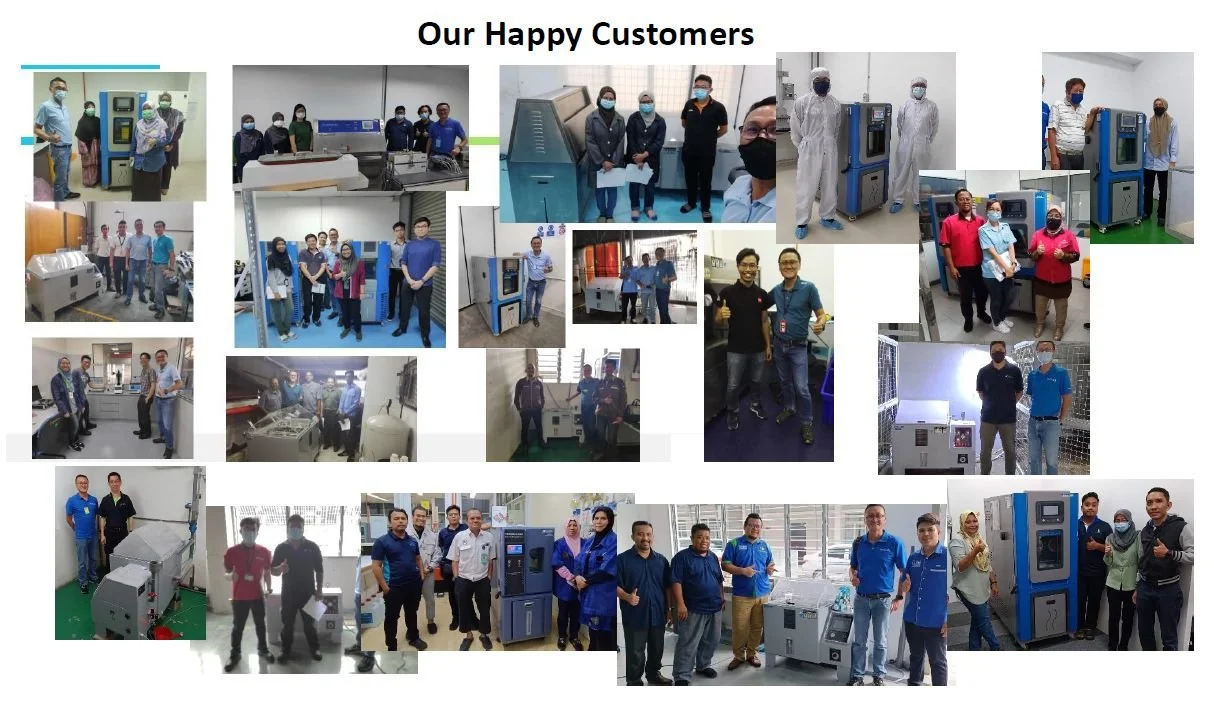
Localized Support for Malaysia's Industrial Hubs
We provide direct equipment sales, technical supply, and rapid on-site maintenance for specialized industries across Malaysia:
• Penang: Semiconductor labs and microelectronics wafer fabrication facilities requiring precise steady-state climate chambers.
• Selangor: Automotive component testing and industrial manufacturing QA facilities needing programmable environmental chambers.
• Johor: Heavy manufacturing and electronics assembly hubs demanding reliable temperature humidity testing equipment.
• Kuala Lumpur: Centralized R&D and compliance testing laboratories.
Request a Quotation
Share your material, specimen dimensions, expected WVTR, test method and laboratory utilities so the proposed configuration can be reviewed against your requirement.