
Environmental Testing for R&D Engineers: Test Types, Standards and Planning Guide
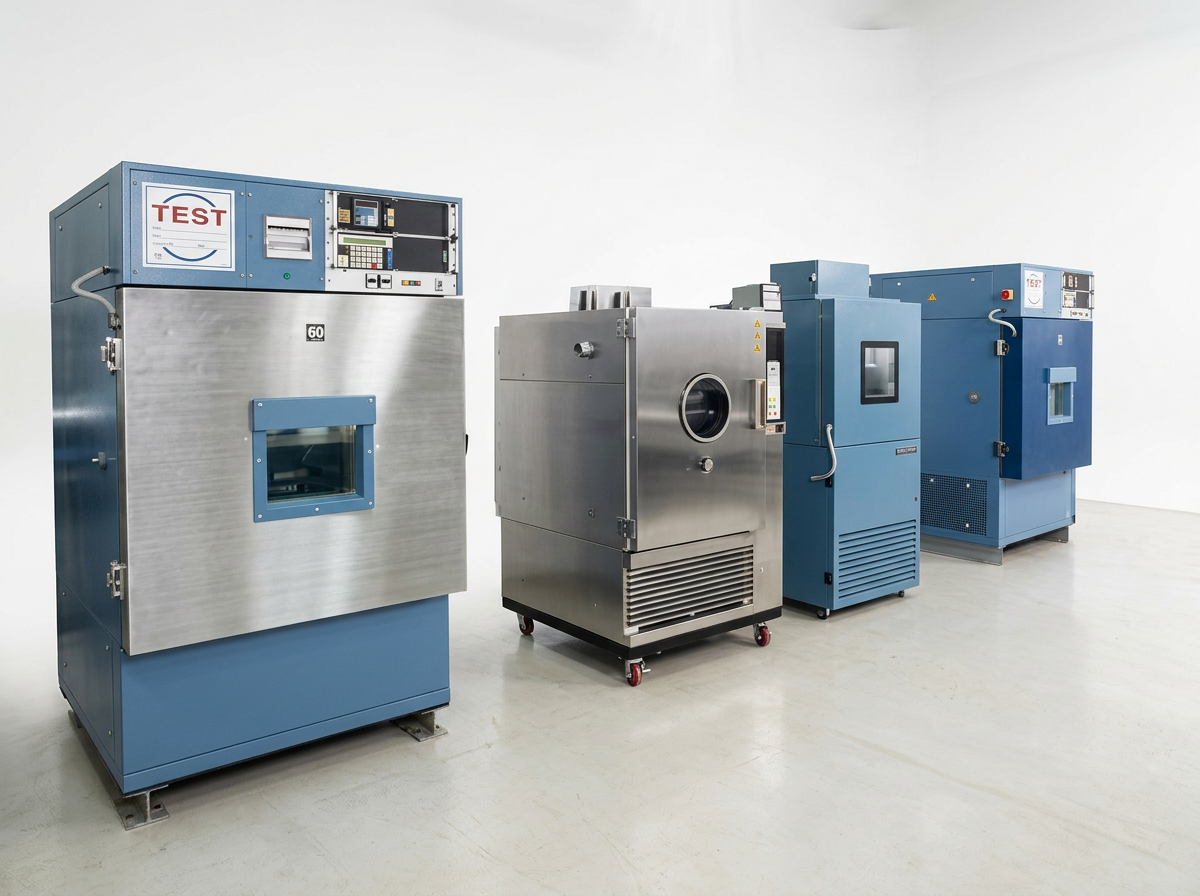
Environmental testing is the controlled evaluation of a product's performance, safety and physical condition under defined environmental conditions. Depending on the product and its intended use, the test environment may include temperature, humidity, vibration, mechanical shock, dust, water, corrosive atmosphere, ultraviolet radiation, rain, altitude or low pressure.
For an R&D engineer, the purpose is practical: identify failure modes before production, shipment or field use. The resulting evidence can guide design changes, material selection, sealing improvements, electronic protection, process controls and product validation. A test chamber can reproduce a specified exposure, but the test profile and acceptance criteria must be chosen for the product and its intended environment.
“ The right environmental test is not selected by choosing the most severe condition. It is selected by connecting the product’s expected exposure to a defined failure risk, test method, severity, duration, measurement plan and pass/fail criterion.”
What is environmental testing?
Environmental testing exposes a specimen to controlled physical or climatic conditions and records how the product responds. Testing may be performed by a manufacturer during design verification or by an independent laboratory as part of a customer, regulatory or product qualification program.
Engineers may use an established method, a customer specification or a tailored test plan. The IEC 60068 framework describes environmental test methods and the process of tailoring tests and severities to expected transportation, storage and operational conditions . The exact part of the standard, exposure profile and evaluation method must still be stated in the test plan.
Environmental testing is different from a general quality inspection. A visual inspection may identify an existing defect, while environmental testing is designed to reveal how a product behaves after exposure to defined stresses.
Why environmental testing matters during product development
Environmental testing helps an R&D team move from assumptions to evidence. A product may function in a laboratory at room conditions but fail after repeated temperature changes, moisture exposure, vibration, corrosion or sunlight. Detecting that weakness before launch is normally less disruptive than investigating field returns after the product has entered service.
A useful program can help the team:
identify likely failure modes and vulnerable components;
compare design revisions under the same conditions;
verify that protective features perform as intended;
collect evidence for a customer or product requirement; and
establish a repeatable basis for design and manufacturing decisions.
The test result is not automatically a certification or a guarantee of field life. Its meaning depends on the selected method, specimen condition, instrumentation, number of samples, sequence of exposures and acceptance criteria.
Environmental test types every R&D engineer should understand
1. Temperature and humidity testing
Temperature and humidity testing evaluates how a product behaves under controlled heat, cold, moisture and changes between conditions. The program may use constant conditions, temperature cycling, humidity cycling or a combined profile.
This type of test is relevant when moisture absorption, condensation, material expansion, insulation changes, corrosion or thermal stress could affect performance. R&D teams should define whether the product is powered during exposure, what functions are monitored, and whether measurements are taken during the exposure, after recovery, or both.
A temperature or humidity chamber does not provide a universal product-life prediction. The profile should be based on the intended use, storage and transportation environment, the product specification and the failure mechanism being investigated.
2. Thermal cycling and thermal shock testing
Thermal cycling changes temperature over a planned ramp or cycle profile. Thermal shock applies a more abrupt transfer between hot and cold zones or environments. These are related but not interchangeable tests.
Thermal shock can reveal weaknesses caused by different rates of thermal expansion between materials, solder joints, seals, coatings, housings and other interfaces. After the specified cycles, the team may perform visual, dimensional, electrical and functional checks. The number of cycles, high and low temperatures, transfer conditions and dwell times must come from the applicable method or product requirement.
3. Vibration and mechanical shock testing
Vibration and shock testing evaluates the effect of transportation, handling, installation or operational motion. The test may be performed alone or in combination with temperature and humidity when the real use environment requires it.
The test plan should state the vibration or shock profile, mounting orientation, fixture, product operating state, monitored functions and any pre-test or post-test inspection. A combined-environment program should not be described only as "vibration testing" because the climatic exposure and sequence can materially change the result.
4. Salt spray and corrosion testing
Salt spray testing creates a controlled corrosive atmosphere for evaluating metallic materials and protective coatings. ISO 9227:2022 covers neutral salt spray, acetic acid salt spray and copper-accelerated acetic acid salt spray methods . ASTM B117 covers the apparatus, procedure and conditions for creating and maintaining a salt spray fog environment .
Salt spray hours must not be presented as a direct conversion to years of outdoor service. ISO states that salt spray methods are not intended to predict long-term corrosion resistance, and ASTM notes that standalone correlation with natural environments is seldom achieved. Use the test for the purpose defined by the product specification, such as detecting coating discontinuities or comparing specimens under a controlled method.
5. Dust, water and ingress protection testing
Dust and water exposure can be important for products used outdoors, in industrial locations, on vehicles or in other environments where particles or liquid may enter an enclosure. The required exposure depends on the product design and the intended ingress protection claim.
The test plan should identify the applicable ingress protection method, enclosure condition, product orientation, operating state and evaluation criteria. A chamber exposure by itself does not create an IP rating or other certification; the applicable product assessment and reporting requirements must also be met.
6. UV and accelerated weathering testing
UV and accelerated weathering tests expose materials or products to controlled radiation and, depending on the method, temperature, humidity, condensation or water spray. They are used to investigate colour change, chalking, cracking, embrittlement, gloss loss and other weathering effects.
A fluorescent UV chamber and a xenon-arc chamber do not reproduce exactly the same spectrum or exposure profile. The selection should follow the material, intended outdoor environment and applicable method. Chamber exposure time must not be converted casually into a fixed number of outdoor years because location, season, altitude, orientation, climate and pollutant levels affect natural weathering.
7. Altitude, rain, ozone and combined-environment testing
Some products require additional exposure to altitude or low pressure, rain, ozone or other climatic conditions. Products may also require a sequence that combines climatic and mechanical stresses. For example, a product used on a vehicle may need temperature, humidity and vibration exposures rather than a single isolated test.
The combined test should represent a defined use, transport or storage risk. It should not be described as a more realistic test unless the sequence and conditions are technically justified.
How to choose the right environmental test program
Start with the product's use profile rather than with a chamber name. Document where the product will be used, transported and stored. Then identify the material, electronics, seals, coatings, joints and other features that may be sensitive to the expected exposure.
Next, define the failure mode that the test is intended to investigate. Examples include loss of function, corrosion, leakage, cracking, deformation, insulation deterioration, loosening, water ingress, colour change or unacceptable performance drift.
Finally, define the evidence required at the end of the test. This may include visual inspection, dimensional checks, electrical measurements, functional operation, leakage checks, performance measurements or a comparison against a pre-test baseline.
Environmental test selection guide
| Test type | Main stress | Typical product risks investigated | Planning points to define |
|---|---|---|---|
| Temperature and humidity | Heat, cold, moisture and changes between conditions | Condensation, corrosion, material changes, insulation changes and loss of function | Temperature and humidity profile, powered state, monitoring points, recovery condition and acceptance criteria |
| Thermal cycling | Repeated temperature changes through a planned ramp or cycle | Fatigue, cracking, deformation, seal weakness and interface stress | High and low temperatures, ramp profile, dwell time, cycle count and pre- and post-test checks |
| Thermal shock | Rapid transfer between hot and cold conditions | Failures caused by different thermal expansion rates, joints, coatings, seals or electronics | Transfer conditions, zone temperatures, dwell time, cycle count, specimen orientation and functional checks |
| Vibration and mechanical shock | Transportation, handling or operational motion | Loosening, fatigue, fracture, connector failure and loss of function | Profile, fixture, orientation, operating state, monitored functions and inspection criteria |
| Salt spray and corrosion | Controlled corrosive salt-fog atmosphere | Coating discontinuities, corrosion initiation and controlled comparison under a specified method | Applicable method, specimen preparation, exposure period, evaluation criteria and number of replicates |
| Dust, water and ingress protection | Particle or liquid exposure to an enclosure | Ingress, sealing weakness, contamination and operational failure | Applicable method, enclosure condition, orientation, operating state, exposure sequence and assessment |
| UV and accelerated weathering | Controlled radiation with possible heat, moisture, condensation or water spray | Colour change, chalking, cracking, embrittlement, gloss loss and surface degradation | Radiation source, material, exposure cycle, water or condensation condition, measurements and interpretation |
| Altitude, rain, ozone or combined environment | Additional climatic exposure or a defined sequence of combined stresses | Pressure-related effects, rain exposure, ozone degradation or interaction between climatic and mechanical stresses | Use environment, sequence, severity, specimen operation, safety controls and pass/fail criteria |
Planning note: The applicable standard, method, severity, duration and acceptance criteria must be confirmed for the product and intended use. This table is a scoping aid, not a substitute for a project-specific test plan.
Standards, test severity and pass/fail criteria
A standards reference should be specific. "Tested to IEC 60068" is incomplete unless the relevant part, procedure, severity and evaluation criteria are also stated. IEC 60068-1 provides general guidance and a test-tailoring framework; it does not replace the product-specific test plan .
For salt spray, the product specification may refer to ISO 9227 or ASTM B117, but the required method, exposure period, specimen preparation and interpretation still need to be defined . For ingress protection, the applicable product standard and test method should be confirmed before a rating is communicated.
Do not publish a statement such as "passes international standards" unless the exact standard, test scope, result and applicable certification or conformity process have been verified. A test laboratory report, a supplier declaration and a certification-body certificate are different deliverables.
What to prepare before requesting a quotation
o receive a useful scope and quotation, provide the product type, specimen dimensions, approximate weight, quantity, powered or unpowered condition, intended environment, applicable standard or customer method, required test level, number of cycles or duration, measurements to be recorded, acceptance criteria and delivery location.
If the applicable method is not yet known, explain the product application and the risk you need to investigate. TestLabs can then advise on the information needed to define a suitable environmental simulation program.
Environmental testing quotation checklist
| Information | What to provide | Why it matters |
|---|---|---|
| Product and application | Product name, function, industry and where it will be used, stored or transported | Connects the test exposure to the real product risk and intended use |
| Specimen details | Dimensions, approximate weight, quantity, materials, enclosure condition and any special fixture needs | Confirms chamber suitability, fixture planning and sample handling requirements |
| Operating condition | Powered or unpowered status, operating mode, monitoring points and electrical or functional checks | Defines whether the test evaluates storage, transport or operation and how performance will be measured |
| Method or standard | Applicable standard, customer specification, internal method or the failure risk requiring investigation | Allows the laboratory to identify the relevant procedure and avoid an undefined test claim |
| Exposure profile | Temperatures, humidity, vibration or shock profile, corrosive method, radiation source, pressure or other conditions | Establishes the severity and sequence instead of relying on a generic chamber description |
| Duration and samples | Test duration or cycle count, number of samples, replicates and any preconditioning | Supports a reproducible program and helps interpret variability in results |
| Measurements and acceptance criteria | Visual, dimensional, electrical, functional, leakage, corrosion or material checks and the pass/fail limit | Defines what evidence the report must contain and how the result will be judged |
| Location and timing | Sample delivery location, target completion date, reporting needs and any witness or communication requirements | Helps TestLabs plan logistics and return a practical quotation scope |
Need help defining the method? If the exact standard is not known, describe the product application and the failure risk you want to investigate. Contact sales@testlabs.my or WhatsApp +6018-2030306.
